

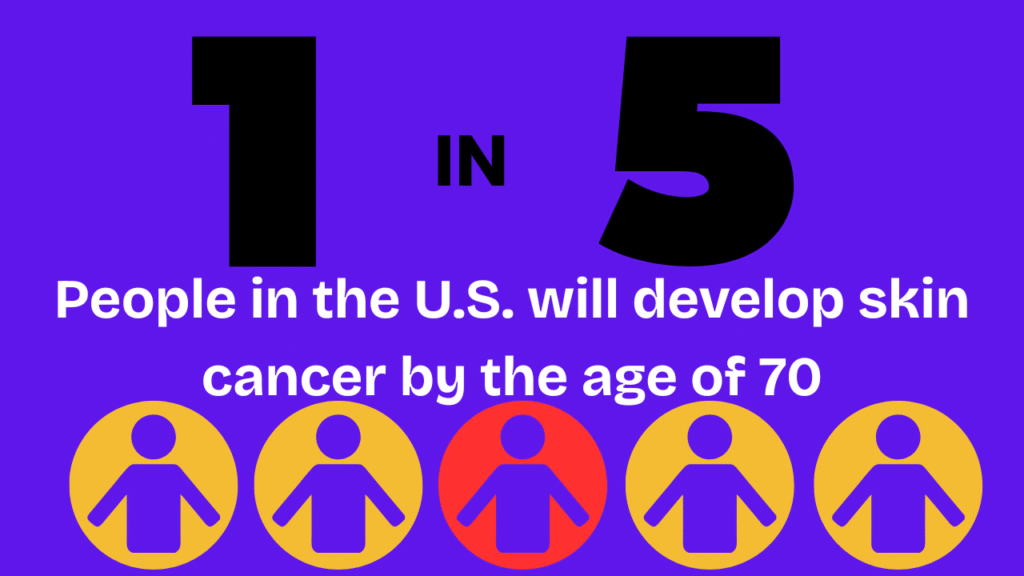
Occurring each year in May, skin cancer awareness month is dedicated to shining a spotlight on the prevention, early detection, and treatment of the most common form of cancer. People of all skin tones develop skin cancer. According to the Skin Cancer Foundation, skin cancer affects one in five Americans before the age of 70.
Most skin cancers are caused by exposure to UV (ultraviolet) rays. While most UV exposure comes from being exposed to the sun, it can also come from some man-made sources, such as tanning beds and sun lamps.
Overexposure to the sun and ultraviolet rays puts individuals at greater risk for skin cancers, including basal cell carcinoma, squamous cell carcinoma, and melanoma.
Though skin cancer is the most common form of cancer in the U.S. and around the globe, there are steps you can take to reduce your risk.
Skin Cancer and Ultraviolet Rays
Skin cancer is a type of cancer that begins as a growth of cells on the skin. Left unchecked, the cells can invade and destroy healthy body tissue. The cancerous cells can also break away and spread to other parts of the body. People who are overexposed to the sun and ultraviolet rays are at greater risk for skin cancers, including basal cell carcinoma, squamous cell carcinoma, and melanoma.
Ultraviolet rays from the sun, including both UVA and UVB rays, can harm your skin and cause cancer. However, UVB rays are stronger and can create more damage. According to the American Cancer Society, skin cancer is the most common form of cancer in the U.S. Experts believe that four out of five cases of skin cancer could be prevented, as UV damage is mostly avoidable.
Here are some tips to protect yourself and your family from skin cancer from sun exposure.
- Choose clothes that will protect you from the sun. If possible, wear long pants, a long-sleeved shirt, a hat with a brim, and sunglasses.
- Always use sunscreen, even if it’s a cloudy day.
- Choose a sunscreen that is broad-spectrum (protecting against UVA and UVB radiation.
- Choose a sunscreen that is SPF 30 or higher and is water-resistant.
- Use a lip balm or lipstick with an SPF of at least 30.
- Apply sunscreen 15-30 minutes before going outside, and remember to reapply every 2 hours.
- Remember to apply (and reapply) sunscreen to kids older than 6 months.
- Babies younger than 6 months old should be kept covered and in shade.
- Discourage teenagers from sunbathing, and remind them to wear sunscreen.
- Be careful at the beach. Sand and water can reflect the damaging sun rays, increasing your risk of sunburn.
- Be extra cautious if you are taking any medication that may make you more sensitive to the sun, such as anti-inflammatories, antibiotics, chemotherapies, antifungals, or blood pressure medications.
- Avoid the sun and seek shade, especially between 10 a.m. and 4 p.m. This is when the sun’s rays are the most intense.
Skin Cancer Checks
Screening tests for skin cancer are an essential tool for early detection. During screening, a doctor will check your skin for any unusual moles, sizes, discoloration, or texture changes. If your family physician feels a mole is suspicious, they may refer you to a dermatologist for a biopsy or further testing to determine if it is cancerous.
Skin Cancer Awareness Month is a great time for a DIY mole check. Be aware of the warning signs of skin cancer and check your own skin. Look for {ABCDE} Asymmetry, Border irregularity, Color variation, Diameter larger than a pencil eraser, and Evolving or changing moles. It’s important to talk to your doctor about anything you find on your skin that causes you concern, so that they can investigate further.
Skin cancer is highly treatable when you find it early, so detection is key!
If you’re concerned about your risk for skin cancers from overexposure to the sun, talk to your family doctor at River Bend Medical Associates. As part of your medical team, we provide you with the best care in all aspects of your health care needs. For more information about our medical practice, or to make an appointment, contact River Bend Medical Associates or call 916-392-4000.