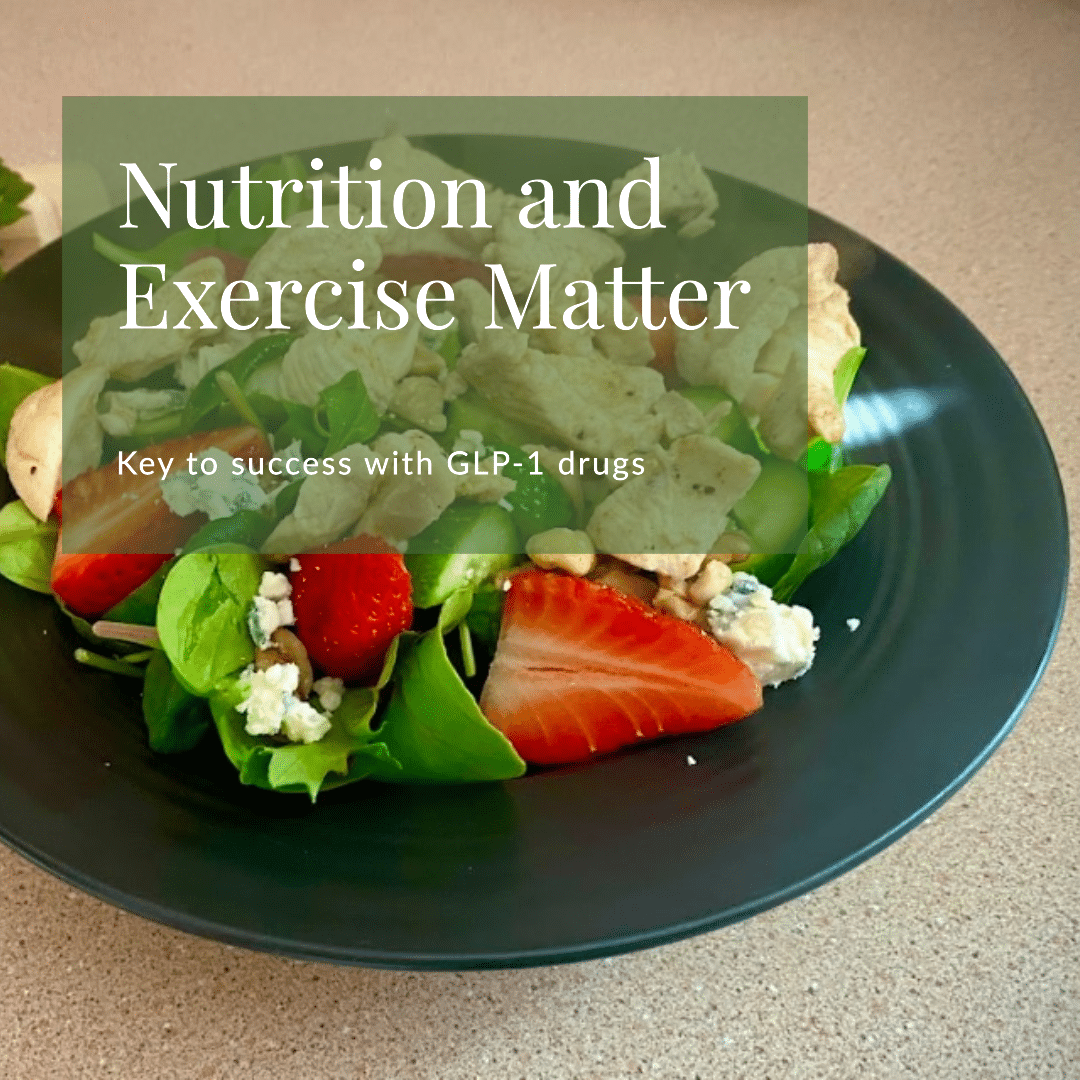



Weight loss drugs have become an incredibly popular and effective treatment for people who have struggled with obesity. Medications such as Mounjaro, Zepbound, Ozempic, Wegovy, Trulicity, and other glucagon-like peptide-1 receptor agonists, or GLP-1s, are one class of weight loss medication that work by mimicking the natural hormone GLP-1. These drugs activate specific receptors throughout the body, triggering insulin secretion when glucose is high, suppressing the release of glucagon, slowing stomach emptying, and signaling appetite centers in the brain to suppress hunger.
Your primary care physician can prescribe a GLP-1 to aid your weight loss, but you still have a big role to play. Healthy lifestyle choices still matter when taking prescription weight loss drugs.

Pay Attention to the Food
It’s important to understand that both the quantity and quality of the food you eat while taking a prescription weight loss medication will impact how you feel and how effective the drugs are. Poor nutrition, skipping meals, or eating foods that are low in nutrients can potentially lead to:
- Tiredness or low energy levels
- Loss of muscle mass
- Nutritional deficiencies
- Dehydration
Healthy Choices Make a Difference
The importance of healthy lifestyle choices like maintaining a balanced diet, getting regular exercise, and staying hydrated while taking weight loss drugs can’t be underestimated. Since you may not feel like eating much, it’s essential to choose quality, whole, and nutrient-dense foods to make your meals and snacks count. Adequate hydration, exercise, and proper nutrition can also be a big help in curbing some of the common side effects of GLP-1 weight loss medications.
Hydration
Maintaining adequate hydration levels is crucial for many reasons, including aiding digestion and regulating body temperature, as well as transporting nutrients to cells and lubricating joints. Drinking enough water each day can prevent fatigue, boost cognitive function, improve sleep, and support heart health.
When taking weight loss medications, your appetite is suppressed. In addition to not feeling hungry, you also may not feel thirsty. If eating less also means drinking less, you’ll need to prioritize your fluid intake. Water is the best choice, but unsweetened tea, coffee, fruit smoothies, or milk can also help you stay hydrated.

Exercise
Regular physical activity is vital when taking weight loss meds because it can help combat muscle loss. Regular resistance exercises like Pilates, yoga, or weight training help preserve strength, promote bone and metabolic health, and support long-term weight maintenance.
Running, walking, or other exercises are also recommended as they can help combat drug side effects like constipation.
Fiber
To support digestive and long-term health, it’s recommended that you consume a minimum of 25 grams of fiber per day. Foods such as whole-grain breads, berries, oats, vegetables, lentils, and nuts are good sources of dietary fiber. If you are struggling to get enough fiber or are experiencing continued constipation as a side effect of the GLP-1 medication, you may want to consider a psyllium-based supplement such as Benefiber, Metamucil, or Culturelle.
Protein
Protein helps maintain and build muscle, support bone health, hormone balance, and immune function. When taking a GLP-1, it’s easy to lose muscle mass. Focus on sources of lean protein such as chicken, seafood, eggs, Greek yogurt, cottage cheese, beans, protein shakes, fish, lentils, and nuts.
Nutrients
Vitamins and minerals are important nutrients your body needs. When you’re eating less, every meal is important. Choose foods that are rich in nutrients to give you more vitamins, minerals, fiber, proteins, and healthy fats per calorie. Nutrient-dense foods such as fruits, vegetables, low-fat dairy products, salmon, and nuts are good choices. If our calorie intake is very low, a daily multivitamin and mineral supplement may help.
When taking prescription weight loss drugs, it’s important to pay attention to what you are eating and drinking for two big reasons. One, since you’re taking in fewer calories because you’re eating less, those calories need to count in terms of fiber, protein, and nutrients. Two, food choices can help you avoid some common side effects like constipation and nausea as you increase your GLP-1 dosage.
Weight loss medications such as Ozempic, Wegovy, Trulicity, Mounjaro, Zepbound, and other glucagon-like peptide-1 receptor agonists, or GLP-1s, can be an important tool for weight loss by helping to suppress appetite. But if healthy dietary choices and lifestyle changes are not made alongside medication use, then your long-term health could be affected.
Taking a proactive approach to proper nutrition and a healthy lifestyle can strengthen your immune system, reduce stress, promote better sleep, prevent injury, alleviate depression, and improve energy levels. Your family practice doctor or nutritionist can provide guidance for adopting healthy dietary habits while taking prescription weight loss medications.
For more information on making nutritious dietary choices or advice on what to eat while taking GLP-1s, schedule an appointment with our nutritionist. We offer one-on-one appointments in person and telehealth!
Our team is committed to delivering compassionate health care for our patients. As part of your medical team, we are here to provide you with the best care in all aspects of your healthcare needs, including weight loss and nutrition guidance. For more information on our medical practice, or to make an appointment, contact River Bend Medical Associates or call 916-392-4000.